

Skip to content
Supply Chain

Timber procurement & logistics
Log receiving & inventory
Material flow tracking
End-to-end fuel supply chain management
Production & Processing

Sawmill operations & wood processing
Manufacturing planning and operation
Maintenance management system
Production monitoring
Sales & Delivery

Demand forecasting & planning
E-commerce solutions
All-in-one cloud ERP
Digital Platform

IT & development
Business intelligence & data analytics
A humanoid robot touches a digital user interface displaying data and charts – artificial intelligence in industrial processes

The critical components of AI solutions for industrial process optimisation

Summary

AI solutions make industrial processes more efficient by automating tasks, predicting failures and demand, and monitoring quality. Choosing the right solution starts with business objectives and the company’s readiness. When AI is integrated into existing systems and its results are monitored, it delivers measurable and lasting benefits.


Efficiency and innovation are essential for success, driving businesses to adopt AI solutions that simplify processes, enhance accuracy and enable smarter decisions. The global AI market was valued at approximately $184 billion in 2024, and studies suggest that AI could boost employee productivity by up to 40% by 2035. The impact of AI is undeniable.

However, not all platforms are created equal, making it critical to understand the core features that set them apart. From predictive analytics to automated control systems, selecting the right capabilities can transform business models and unlock new levels of operational efficiency.

This article provides a clear guide to key AI technologies, their real-world applications across industries, how to select the right AI solution and how to get the most value from it.
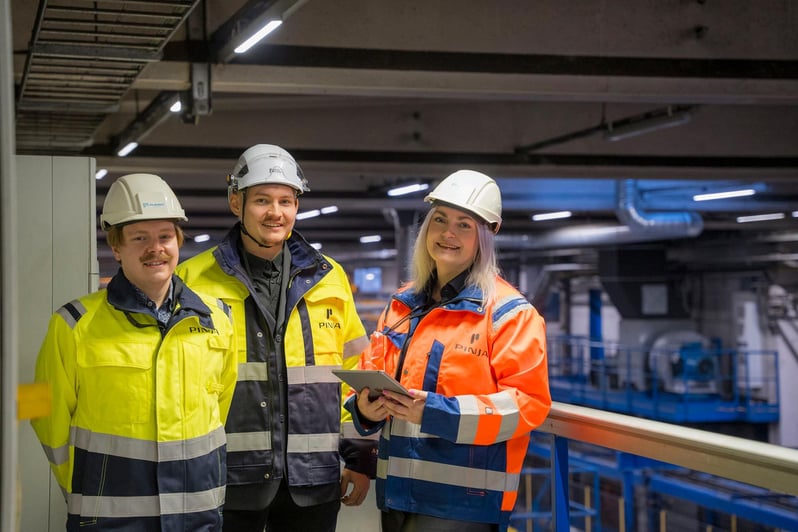

Three experts in hard hats and high-visibility vests with a tablet at a factory – AI in industrial processes

How AI works and powers business operations

AI represents a collection of technologies designed to simulate human intelligence. These systems analyse data, detect patterns, make predictions and automate processes, helping businesses optimise efficiency, minimise human error and generate actionable insights for decision-making.

Key technologies underpinning AI solutions include:

  • Machine learning (ML) focuses on developing algorithms that learn from both historical and real-time data. This allows businesses to forecast trends, improve workflows and identify patterns that might otherwise go unnoticed.
  • Deep learning, a subset of ML, uses complex neural networks to process large datasets. It excels in solving advanced problems, such as image recognition, speech processing and nuanced decision-making tasks.
  • Autonomous systems, powered by AI, operate with minimal human intervention. These systems improve efficiency across repetitive or resource-intensive workflows in areas such as manufacturing, logistics and supply chain management.

Another key aspect of AI is its ability to process language and adapt to dynamic tasks. Foundation models, large-scale AI systems pre-trained on vast datasets, can be fine-tuned for specific applications such as content creation, data categorisation or anomaly detection.

Complementing this is natural language processing (NLP), which enables machines to interpret, understand and respond to human language. NLP is widely used for automating customer communication, generating reports and analysing unstructured text data.

When businesses face complex optimisation challenges, traditional methods often fall short. Metaheuristics, a class of AI-driven algorithms, provide a solution by efficiently tackling large-scale, dynamic problems. These algorithms improve resource allocation, streamline production planning and optimise decision-making processes.

By rapidly identifying optimal or near-optimal solutions, they improve workflows, logistics and operational planning in industries ranging from manufacturing to transportation.

AI technologies transform data into actionable outcomes, enabling businesses to improve efficiency and decision-making.

Real-world applications of AI across industries

1. Optimisation and efficiency enhancement

One significant area where AI adds value in manufacturing is workflow optimisation. By analysing operational data, AI systems can identify bottlenecks that slow processes down and propose solutions to remove them. Automating repetitive tasks, such as data entry or routine inspections, allows employees to focus on higher-value activities, further improving productivity.

In addition, AI can allocate resources dynamically, ensuring machines, materials and labour are used optimally. This results in reduced downtime, better capacity utilisation and measurable productivity improvements.

Three engineers in hard hats monitoring production with a tablet – AI optimises workflows and production efficiency

Another key application is supply chain management. AI helps businesses forecast demand more accurately, reducing the risks of overstocking or running out of inventory. This ensures that resources are allocated where they are needed without tying up unnecessary capital.

Logistics operations also benefit from AI-driven route planning, which minimises transport distances and fuel consumption. Companies can save significantly on transportation costs while ensuring faster delivery times.

Energy optimisation is another critical area where AI is making a difference. By analysing energy consumption across production facilities, AI identifies inefficiencies and recommends actionable changes. For example, scheduling machines for off-peak hours or implementing predictive maintenance can lower energy bills. AI models can also predict fluctuations in energy demand, allowing facilities to align their usage with available supply.

AI improves industrial efficiency by automating workflows, optimising resources and improving energy usage.

2. Predictive analytics and reporting

Predictive analytics and reporting are essential in AI-driven solutions, enabling organisations to optimise processes, reduce risks and make informed decisions. A key application is preventive maintenance, where AI analyses historical and real-time data to predict equipment failures, allowing for proactive maintenance that minimises costly disruptions.

This is vital for industries such as manufacturing and energy, where reliability is crucial.

AI also generates operational insights by processing large datasets to identify inefficiencies and opportunities. Real-time reporting tools help decision-makers swiftly address issues such as process bottlenecks or fluctuations in inventory levels.

Additionally, AI transforms knowledge management by centralising organisational information, enhancing collaboration and breaking down silos. Tools like Microsoft Fabric centralise and streamline access to organisational data, making it easier for teams to collaborate and make decisions based on accurate and up-to-date information.

Process automation further drives efficiency by handling repetitive tasks and enabling robotics to perform precision work, such as quality inspections. Lastly, AI supports strategic decisions by analysing data and simulating scenarios, helping leaders reduce uncertainty and align strategies with long-term goals.

Predictive analytics transforms raw data into actionable insights, driving smarter decisions and operational excellence.

3. Generative and adaptive AI applications

Generative and adaptive AI solutions are revolutionising workflows and customisation. AI automates tasks such as report generation, data categorisation and content creation, significantly reducing time spent on manual processes while maintaining consistency and accuracy. This enhances productivity across content management systems.

Adaptive AI brings personalisation to the forefront, using customer data and feedback to tailor products and services. From fine-tuning configurations to rapid prototyping through generative design, businesses can respond to unique customer needs with agility.

AI-based document intelligence solutions further boost efficiency by quickly analysing organisational databases to retrieve relevant information, enabling informed decision-making and reducing delays.

Smart chatbots and virtual assistants add another layer of efficiency, automating real-time interactions with both customers and internal teams. These tools not only improve response times but also integrate seamlessly into workflows, delivering support where and when it is needed most.

Generative and adaptive AI redefines efficiency by merging automation with intelligence.

4. Diagnostics and quality control

AI-driven diagnostics and quality control are reshaping industrial processes by enhancing precision, reliability and efficiency.

Anomaly detection is a key application, where AI-powered systems monitor production in real time to identify irregularities. For example, if a machine’s performance deviates from expected parameters, the system flags the issue immediately, helping to prevent failures and minimise material waste.

By continuously analysing data patterns, AI detects subtle shifts that human operators might miss, ensuring smoother operations and reduced downtime.

Quality assurance further benefits from AI by automating inspections traditionally performed manually. Using computer vision and machine learning, AI evaluates products against industry standards with unmatched speed and accuracy, inspecting hundreds of items per minute while eliminating human variability. This ensures consistent product quality and reduces the number of defective products reaching the market.

Worker inspecting beverage bottles on a production line with a tablet – AI-based quality control and diagnostics

Automated quality checks ensure consistency and reduce human error in industrial processes.

A practical guide to selecting the right AI solution

Step 1: Assess business readiness for AI

Implementing AI solutions for industrial process optimisation requires businesses to first assess their readiness. This involves evaluating infrastructure, data resources and workforce capabilities to ensure a strong foundation for successful AI integration.

Assessing infrastructure is a key step. Businesses must determine whether their hardware, software and networks can handle AI’s computational demands, such as running machine learning models. If gaps exist, upgrades such as cloud platforms or high-performance servers may be necessary.

High-quality data is equally essential. AI systems depend on large, accurate and up-to-date datasets for training and operation. Organisations should evaluate the completeness and reliability of their data. If data quality is lacking, improvements such as enhanced data collection and validation should be prioritised.

Workforce capabilities are another critical factor. Adopting AI often requires specialised expertise. Conducting a skills gap analysis helps identify training needs or hiring requirements, ensuring teams are prepared for AI implementation.

Person at a laptop ticking off a checklist – assessing business readiness for an AI solution

A successful AI implementation begins with an honest assessment of infrastructure, data and workforce readiness.

Step 2: Define business objectives and AI requirements

Defining business objectives and AI requirements ensures that initiatives are aligned with strategic goals, address specific challenges and deliver measurable outcomes.

To start, AI goals must connect directly to overarching business objectives, such as improving operational efficiency, enhancing product quality or enabling data-driven decision-making. This alignment positions AI as a tool for long-term growth and competitive advantage, rather than a standalone technical experiment.

Identifying pain points is equally critical. Businesses should evaluate challenges such as production bottlenecks, resource inefficiencies or high costs to pinpoint areas where AI can provide the most value. For instance, automating repetitive tasks can reduce labour costs in manufacturing, while route optimisation can save time and fuel in logistics.

Establishing clear success metrics, such as reducing downtime or achieving specific cost savings, ensures that AI investments are both measurable and impactful, driving meaningful improvements across the organisation.

Clear objectives and metrics ensure that AI implementation drives measurable and strategic value.

Step 3: Evaluate AI solution capabilities

Evaluating the capabilities of an AI solution is crucial to ensure it aligns with business needs and supports long-term growth. The right solution should address current challenges while adapting to future demands, avoiding costly mismatches and integration issues.

Scalability and flexibility are key considerations. As businesses grow and operations become more complex, the AI solution must scale seamlessly, whether by managing larger datasets or accommodating expanded workflows. Flexibility is equally vital, enabling the system to adapt to evolving technology and industry shifts, ensuring it remains relevant over time.

Compatibility with existing systems is another critical factor. AI should integrate effortlessly with systems such as ERP and MES to maintain smooth operations and efficient data flow. Poor integration can create bottlenecks and inefficiencies, undermining the solution’s potential.

Lastly, customisation is essential. A tailored AI system can address unique operational requirements, maximising its value. Standardised solutions often fail to meet the nuanced demands of specific industries, making adaptability a must.

Scalable, compatible and customisable AI solutions are the foundation of successful implementation in dynamic business environments.

Step 4: Select the right AI vendor or partner

Selecting the right AI vendor or partner can define the success of your process optimisation efforts. The vendor’s expertise, security practices and support services all contribute to the solution’s overall impact, making careful evaluation essential.

A vendor’s industry expertise often separates exceptional partners from average ones. Providers familiar with your operational environment can better navigate specific challenges and design tailored solutions. Additionally, compliance with data security regulations such as the GDPR or HIPAA is non-negotiable.

Choosing a vendor with robust security measures ensures that sensitive data remains protected and regulatory standards are met.

Strong support services also indicate a reliable vendor. From onboarding resources to team training, comprehensive assistance ensures smoother adoption. Equally, ongoing maintenance and timely updates are crucial for sustaining performance over time.

Human hand and digital AI hand shaking – choosing a reliable AI vendor and partner

Finally, financial considerations cannot be overlooked. Assess both upfront costs and potential long-term returns to identify the best balance between value and affordability. Comparing multiple vendors on these metrics ensures a well-rounded, strategic choice.

The success of an AI solution hinges on selecting a vendor with both technical expertise and a commitment to long-term partnership.

The right partner must not only meet key criteria but also deliver value aligned with your goals. Pinja’s AI solutions excel in optimising efficiency and driving innovation. With tools such as Production Operations for automated production scheduling and AI-powered analytics for smarter decision-making, Pinja helps businesses reduce costs and improve operations.

Our expertise in predictive maintenance, supply chain optimisation and sustainability reporting ensures seamless integration, compliance and growth. Our customisable AI solutions transform workflows and deliver lasting value.

Step 5: Plan for AI implementation

Effective planning is the backbone of a successful AI implementation in industrial processes. A clear, phased approach minimises risks, aligns initiatives with business objectives and ensures scalable adoption.

Pilot projects are a smart starting point. Small-scale deployments validate specific use cases and provide a controlled environment to test AI functionality. These pilots reveal potential challenges, allowing teams to fine-tune configurations before expanding across the organisation. Addressing issues early reduces the risk of costly missteps during full-scale deployment.

Once pilot projects demonstrate success, a phased implementation strategy ensures smoother integration. Starting with high-impact processes, such as production scheduling or inventory management, allows organisations to focus on measurable improvements.

Each phase builds confidence and momentum while providing opportunities to resolve unforeseen challenges and refine the system for broader use.

Stakeholder involvement is equally essential. Engaging leadership aligns the project with strategic goals, while collaboration with IT teams ensures technical feasibility. Involving end users promotes workflow compatibility, reducing resistance and fostering adoption.

A well-planned, collaborative approach turns AI implementation into a seamless, organisation-wide success.

Pilot projects and phased strategies reduce risks and build momentum for AI adoption.

Getting the most out of your AI investment

1. Continuous improvement through feedback and updates

Continuous improvement is the key to unlocking the full potential of AI solutions in industrial processes. AI systems thrive on refinement, evolving to stay accurate and relevant as operational needs shift. Achieving this requires a dynamic approach that balances user insights with proactive technical updates.

User feedback is an invaluable resource for improving AI performance. Employees interacting with the system daily often uncover nuances – such as inefficiencies, overlooked data patterns or gaps in functionality – that may not be evident otherwise.

For instance, an AI-driven scheduling tool might falter with specific variables, or predictive maintenance might miss subtle yet critical trends. Leveraging these insights enables businesses to fine-tune workflows, enhance algorithms and optimise real-world performance.

On the technical side, AI systems must continuously learn. Updating models with fresh, high-quality data ensures predictions remain accurate, while software upgrades introduce new features, fix bugs and bolster security.

Person in a suit drawing a rising growth curve with a finger – benefits of AI investment and continuous improvement

Continuous feedback and updates are the foundation of a successful AI lifecycle.

2. Integration with existing systems

Integrating AI solutions with existing systems is crucial for effective industrial process optimisation. Without proper integration, data silos and workflow disruptions can diminish AI’s benefits. Ensuring seamless connections with systems such as ERP, CRM or MES requires careful planning.

Interoperability is key – AI must communicate smoothly with current systems, facilitated by APIs and middleware to maintain efficient data flow. For instance, linking AI-driven predictive maintenance with MES ensures actionable insights reach the right people at the right time.

Aligning AI with workflows prevents disruptions, while shared insights across systems enhance decision-making. Connecting AI supply chain tools with ERP improves inventory management and resource allocation.

Effective integration ensures AI solutions work in harmony with existing systems, driving both efficiency and collaboration.

3. Employee training for efficient utilisation

Equipping employees with the skills to use AI tools effectively ensures these technologies deliver their full value in industrial processes. Proper training enables teams to use AI as intended, avoiding misapplication or inefficiencies that can hinder outcomes.

A structured approach to upskilling and fostering collaboration bridges the gap between technology and daily workflows.

Training programmes should focus on both technical and operational aspects. Employees need to operate AI systems confidently, interpret outputs and integrate insights into their responsibilities.

For instance, a production manager benefits from understanding predictive maintenance alerts, while a quality control specialist gains value from learning about anomaly detection algorithms.

Since technical expertise varies across teams, modular training programmes provide tailored instruction for specific roles and needs. Beyond skills, fostering collaboration between employees and AI systems encourages alignment. When teams see AI as a partner that enhances decision-making and problem-solving, they are motivated to explore innovative ways to use it effectively.

Employee training ensures AI tools are used efficiently and integrated into workflows effectively.

4. Measuring and monitoring ROI for long-term success

Measuring and monitoring the return on investment (ROI) of AI solutions ensures they deliver measurable benefits and align with business goals.

Tracking KPIs tied to AI objectives is a vital first step. Metrics such as cost savings, operational efficiency and error reduction provide concrete insights into performance. For instance, a manufacturing company might measure reduced downtime, increased production rates or fewer defects. Regularly comparing these results against earlier benchmarks highlights the value of AI implementations.

Analysing ROI data enables businesses to pinpoint areas of success and improvement. High cost savings might justify scaling similar solutions, while stagnant efficiency gains could indicate the need for refined algorithms or better training data. Persistent errors may signal gaps in AI capabilities or integration challenges.

This iterative approach ensures AI remains aligned with evolving goals and fosters smarter resource allocation for future projects. Data-driven insights empower your organisation to prioritise investments that promise the highest returns, sustaining growth and competitiveness.

ROI icon surrounded by digital metric, growth and target icons – measuring and monitoring the ROI of AI solutions

Monitoring AI performance through KPIs and refining strategies based on results ensures sustainable ROI.

How we can help

AI is not only a technology but also a strategic investment. When you choose a solution based on your goals and implement it in phases, the benefits grow over time. It is equally important to choose a partner who understands both the technology and your industry.

With capabilities such as production optimisation, predictive maintenance and demand forecasting, Pinja’s AI and machine learning solutions provide end-to-end tools designed to enhance efficiency and reduce costs.

Our solutions also address critical needs such as supply chain transparency, sustainability reporting and personalised customer experiences, offering both immediate and long-term value.

To explore how Pinja can support your specific goals, connect with our team today for tailored guidance in finding the AI solution that best fits your business.

Frequently asked questions

What are the four main problems AI can solve?

  1. Operational inefficiencies – AI streamlines processes through automation and optimisation, speeding up workflows, reducing manual work and enabling better resource allocation.
  2. Inaccurate forecasting – Advanced data analytics and machine learning enable more accurate demand forecasts, helping companies optimise inventory management and production.
  3. High error rates – AI detects and prevents quality deviations at an early stage, reducing rejects and improving production quality.
  4. Resource mismanagement – Intelligent systems improve resource allocation and supply chain transparency, increasing cost efficiency and operational reliability.

What are AI solutions?

AI solutions are technologies designed to automate tasks, optimise processes, provide decision-making insights and improve efficiency. They include predictive maintenance, demand forecasting, workflow automation and supply chain management tools. AI solutions are tailored to each company’s specific needs so that they support business objectives as effectively as possible.

What can AI do for a business?

AI enhances efficiency, reduces operational costs and improves decision-making through analytics. It also optimises resource allocation, personalises customer experiences, improves quality control and streamlines compliance with regulatory standards.

Can AI solve an optimisation problem?

Yes. AI solves optimisation problems by analysing data to identify inefficiencies and recommend optimal solutions. Examples include improving production schedules, minimising energy consumption and optimising supply chain operations.